How to Read More Books With the Time You Already Have
How to read more books by finding a routine that fits your real days. Use last year's reading and a simple weekly check to make space without quotas.
By Ultimate Book Tracker by Cosmo Suite · Editorial policy
Published · 8 min read

Your TBR grows while reading waits for a quiet hour. That hour may be hard to find. Look for openings that already exist in your day, such as the pause before dinner, the trip across town, or the few minutes before sleep.
You do not need to turn reading into another target. First, notice when you already have room for a book. Then choose something that fits that kind of moment and make it easy to pick up again.
If you want to know how to read more books, look for the opening your day already offers.
To read more books, start with the day you already have. Notice one opening, pick a book that suits it, and make the next session easy to start.
The Short Version
- Start with the reading you already do, not an ideal week.
- Match a book and format to a real opening in your day.
- Review what worked without adding a quota or streak.
Reading more starts with a place in your day
A reading window is a recurring pause in your day when you can pick up a book or listen to one. Find one that already exists instead of waiting for an empty day. A familiar event can make that opening easier to remember than a time slot you have to invent.
Start with the times when you are already waiting, settling in, or moving between activities. Some openings are calm and predictable; others are short and likely to be interrupted. Both can count, but they suit different books and formats.
Psyche's guide by Christian Jarrett recommends making books easy to reach and linking reading with a situation that already happens, such as breakfast or a commute. The guide draws on psychologist Benjamin Gardner's advice to connect a new action to a familiar setting. A 2026 PubMed-indexed reanalysis found context stability among factors associated with habit strength in other everyday behaviors. It did not study reading, so use it as support for trying a recurring cue, not a prediction of how many books you will finish. Keep a book where that moment happens. If you read digitally, leave it open or easy to find.
When the hard part is keeping your reading in one place, a single spreadsheet can hold your book history. It is one way to make the record easier to return to, but it does not create time by itself.
Reading windows at a glance
A reading setup is the book or format you have ready for a particular kind of pause. Match it to how much focus the moment allows, then keep it within reach. The table shows common fits to help you choose, not a schedule you have to follow.
| Opening in the day | What may interrupt it | Reading setup | Best for |
|---|---|---|---|
| A short wait | Your turn may come quickly | A book already in your bag or on your phone | A chapter you can leave and return to |
| A predictable break | Messages or a change of plans | A familiar paperback, ebook, or audiobook | Picking up where you stopped |
| A quiet part of the evening | Tiredness or another task | A comfortable place and the current book nearby | Reading without watching the clock |
| Time spent on a routine task | Your hands or attention are occupied | Audio, only where listening is safe and comfortable | Making use of a moment when print is impractical |
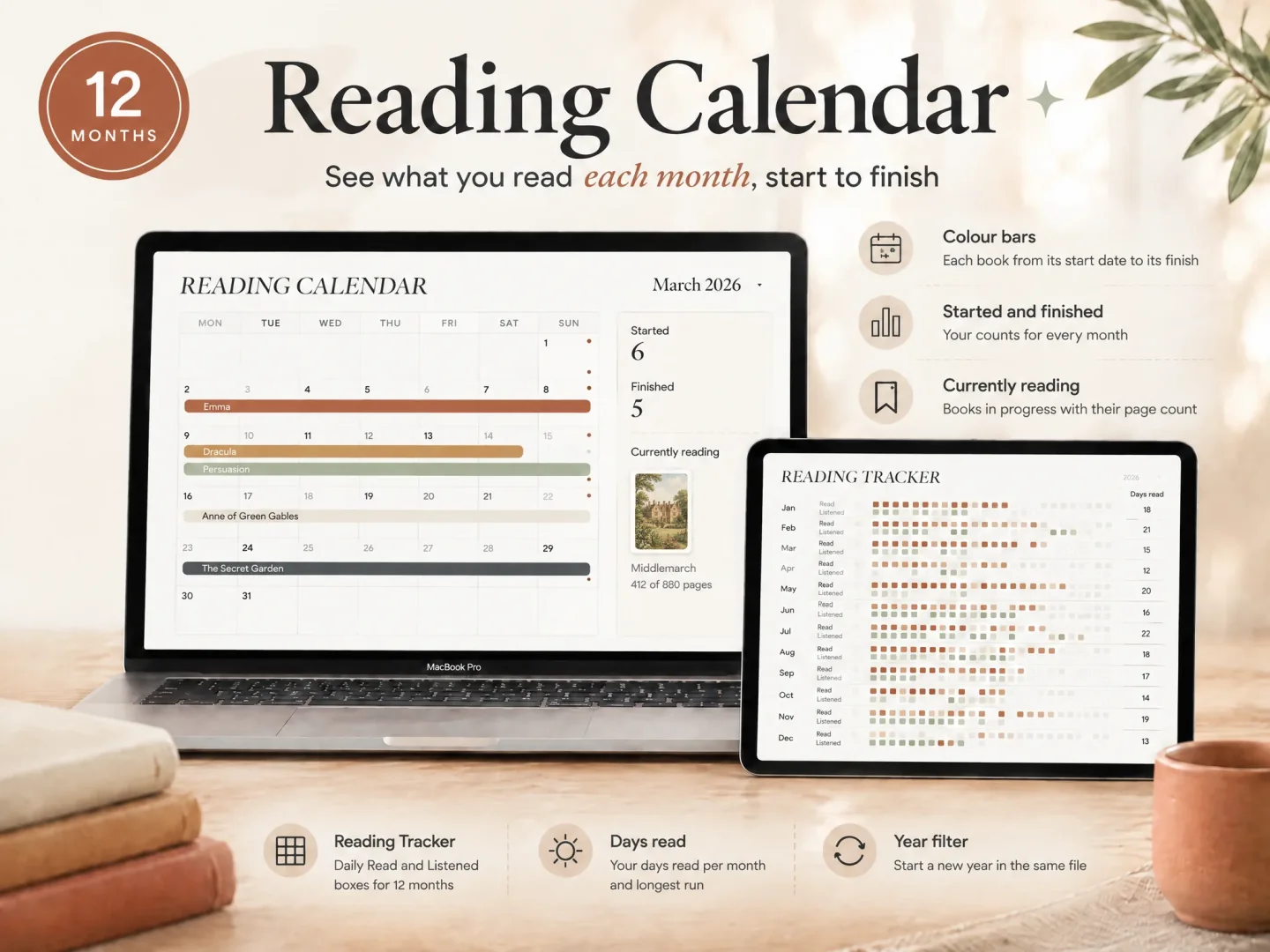
Choose the options that resemble your day. One reliable opening is enough to start. Try it with a book you want to read. The Reading Calendar in a book tracker can help you see when reading already tends to fit.
Try to match the length and feel of the book to the kind of attention you have. A page-turning novel may be easy to pause during a wait. A book with more demanding chapters may feel better in a quiet room. If you do not know yet, use the next few reading moments to notice what feels natural. There is no need to record every session or make a rule for each part of the day.
Start with your own reading pattern
A reading pattern is the way your books and available time come together across ordinary days. Use last year's finished titles and any record of formats or minutes to see what already fits. If you do not have a record, start noticing now instead of guessing a new quota. Your past gives you a reference, not a target.
Use the details that answer a real question. Did print fit the quiet parts of the day? Did audio suit a particular kind of errand? Did you finish more when the next book was already chosen? You are looking for a clue, not proof that one format is best for everyone.
Picture a TBR with 300 titles, 120 books already owned, and 40 priorities filtered by mood and length under 350 pages. When a short, interruptible opening appears, that priority list can make it easier to pick a book that suits the moment. It does not mean the shorter book is better. It means the choice is ready before the opening arrives.
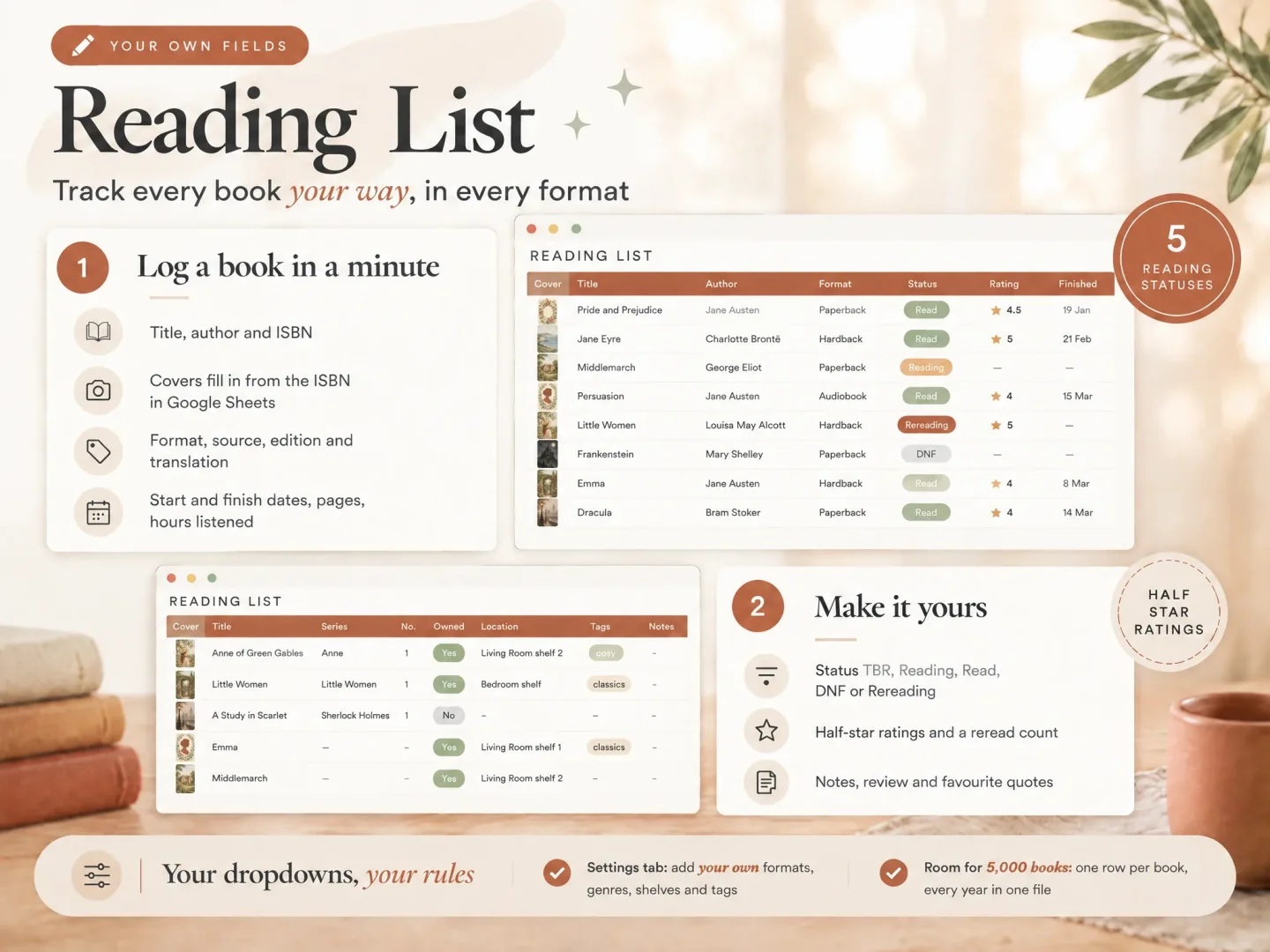
A book tracker spreadsheet can keep that list close to the titles you have finished. The book tracker spreadsheet guide explains the basic record and what to keep in it. Keep your own list simple enough that you can choose a book and get back to reading.
Use the filter to shorten the choice in front of you. Keep the full TBR intact and use the shortlist for the next book. Change picks when your mood or time changes. The list handles one choice before a moment that may not last long. This is an illustration, not a reading trial: a shortlist may make a choice easier, but it cannot predict what you will finish.
Make the next session easy to begin
A reading session is easier to start when you do not have to solve several small problems first. Leave the current book somewhere you can reach it, keep your place, and decide what you might read next before closing it. Then a spare moment can go to the story instead of another search through the TBR.
The current book does not have to travel everywhere. You might keep a paperback near the sofa and an ebook ready for a wait away from home. If you switch formats, note where you stopped so you can return without rereading pages to find your place. A short note to yourself can do the job.
Try matching the book to the moment as well. A dense chapter may suit a quiet stretch, while a familiar story may be easier to pick up when you expect interruptions. You can choose based on mood, length, or what you feel like reading. No system has to decide for you.
Psyche's guide also recommends choosing books you enjoy and allowing yourself to put down one that is not working for you. Keep another title in mind for the next opening. The aim is to make it easy to return to a book you want to read.
You can also prepare a stopping point. A bookmark, an open ebook, or a note about the last chapter makes it easier to return after an interruption. If you often change formats, note the last page or chapter you reached. That tiny bit of context can save you from spending the next reading window trying to remember where you were.
Use a record to notice what works
A light reading record is a short note of details you want to remember, such as a title, format, or finish date. It can help you see which moments suit you, as long as recording takes less attention than the book. Keep only details that answer a question. You do not need a daily score.
For example, a short note beside a finished title might remind you that audio fit a walk, while print worked better in a quiet room. After a while, you may see a pattern worth keeping. If you do not, the record has still helped you remember what you read.
TIME's guide to reading more also recommends trying different formats and tracking books. Think of that as a way to learn what fits your own day, not a requirement to measure every session. If book counts make reading feel like work, leave them out and keep only the notes you value.
If you already set a reading goal, keep its review separate from this routine. The guide to reading goals for adults covers choosing and adjusting a target. This article is about finding a place to read, whether or not you track a total.
Where the Ultimate Book Tracker Fits
A tracker helps when you want a record of what you read and the formats you use. A notebook, a basic list, or memory can be enough when you do not need a larger view. Choose a system for the information you want to keep, then leave it alone when it starts interrupting the reading.
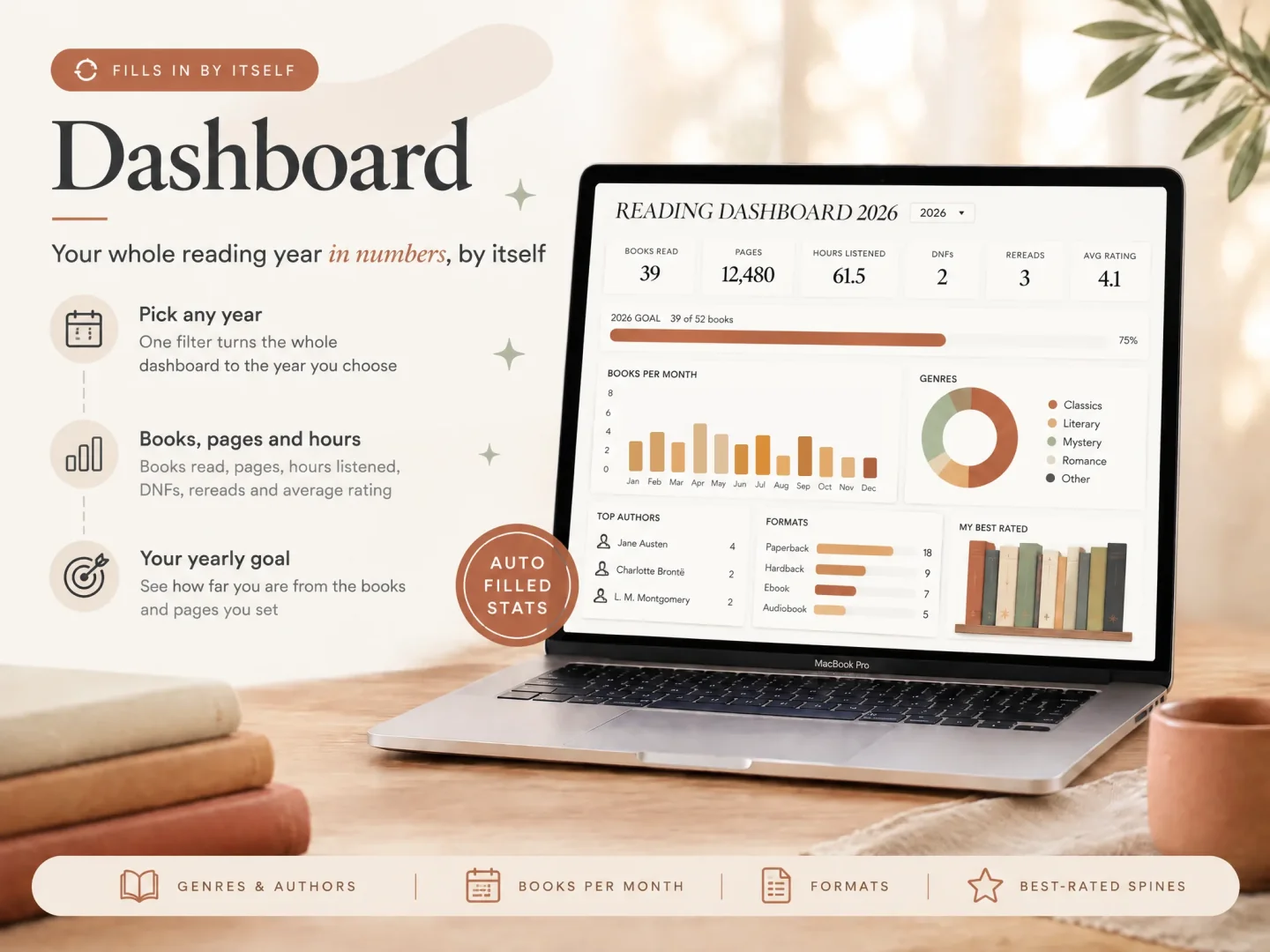
Ultimate Book Tracker (by Cosmo Suite: one Excel and Google Sheets file, 14 tabs, $9 once) includes a Reading List and a Reading Calendar. Enter a book once in the Reading List and the connected tabs update. The Dashboard can show books, pages, hours listened, and other reading details for the selected year.
The Ultimate Book Tracker reading spreadsheet also has room for 5,000 books and can be reused each year. Those details matter if you want one file for both a reading record and the day-to-day choices around it. They are not a reason to track more than you need.
You can start with one book and one recurring moment. If that is enough, keep the routine and skip the tracker. If you want to remember your finished books and see your reading in one place, use a record that stays easy to update.
The about page explains who makes the file, and the editorial policy describes how the site checks its guides. Contact the team at support@ultimatebooktracker.site if you spot an error in a product detail or source.
Frequently asked questions
How do I train myself to read more books?
Make it easy to begin. Keep a book where you already have a quiet moment, choose something you want to read, and return to the same part of your day when it works.
How can I read more books when I'm busy?
Look for a reading window that already exists, such as a predictable break or a quiet part of the evening. Keep a book suited to that kind of moment nearby.
Is reading 20 books a year a lot?
There is no single number that makes a year of reading good or bad. Compare your own years only if that helps you understand your pattern; books vary in length and format.
What is the five-finger rule for books?
It is a book-selection check for young readers: Scholastic's [guide](https://www.scholastic.com/parents/books-and-reading/raise-a-reader-blog/five-finger-rule.html) explains how to count unfamiliar words on a page. It is not an adult reading target or a rule about whether you should enjoy a book.
Do audiobooks count as reading?
That depends on what you want your record to show. You can count a finished audiobook as a book, and keep listening hours as a separate measure when time matters to you.
