Reading Goals for Adults: Set One That Fits Your Year
reading goals for adults work best when they fit your real reading year. Choose books, pages or minutes, then review the goal each month.
By Ultimate Book Tracker by Cosmo Suite · Editorial policy
Published · 8 min read

A reading goal is a measure you choose to notice your reading over time. It gives your year some shape while leaving room to enjoy the books themselves. Start with what you read in a normal year, choose one measure you care about, and set a goal that fits the way you read. It can be a number of finished books, pages, or reading minutes. You can revise it when your year changes.
The Short Version
- Use your own recent reading as the baseline for a new goal.
- Track one measure: books, pages, or minutes.
- Review the goal monthly and adjust it when real life changes.
A large target may feel satisfying in January and awkward by April. A modest one can help you notice time for reading. For adults balancing work, care, travel, illness, or a long book, the goal has to fit around the rest of life.
What is a good reading goal for adults?
A good reading goal fits the reading you do and why you want one. For example, count books when you want a record of finished titles, or track minutes if you want more time to read. Pages can help you follow progress through print and ebooks. Let the number describe your year, not your worth as a reader.
Begin with last year or the last few months. A reader who finished 42 books can use that total as a reference, then decide whether to set a similar target or choose a different one. If your reading is irregular and you have no baseline, start with a short trial. You might choose a book to finish next or set aside reading time when it fits your week.
If you want a place to keep that history, a book tracker spreadsheet can show finished books across the year. A record also helps you see when a number came from a busy season rather than a permanent change in how much you read. Ultimate Book Tracker keeps a yearly goal beside your reading list if a prepared spreadsheet fits the way you keep that record.
Choose books, pages, or minutes
Books, pages, and minutes each describe a different part of reading. Use books for finished titles, pages for progress through print or ebooks, and minutes when you want to make room for reading across formats. Choose the measure that answers your own question.
Apple Books offers a yearly books goal and a daily reading-time goal, a useful reminder to match the measure to your reason. Books also treat a short novella and a long novel as equal. Page counts vary by edition. Minutes need a session record if you want a precise total.
| Measure | Useful when | Watch for |
|---|---|---|
| Finished books | You care about titles completed or a year-end count | Book lengths differ; a count can reward short books over long ones |
| Pages | You want to see progress through print or ebooks | Editions and formats can have different pagination |
| Minutes | You want to set aside reading time across formats | A timer can make a relaxing activity feel monitored |
Pick one measure for the main goal. Keep other details as personal notes. If you track minutes, book and page counts can stay outside the target. With a book goal, review the yearly total without setting a separate monthly quota. A meta-analysis in Psychological Bulletin found that monitoring goal progress can support behavior change across the studies it reviewed (American Psychological Association). The research did not study reading goals, so it offers context for checking progress, not proof that a target will make you read more.
For a book-count target, use a rough monthly pace only as a reference. Your actual reading may come in bursts. A long audiobook or a dense nonfiction title may take more time than several short books. A monthly check can show direction without becoming a schedule you must follow.
One Reading Year, Worked Through
Choose a target by looking at your recent reading, naming your reason, and picking a small change that feels manageable. Set a date to review it. A short review can show whether the goal still matches your reading and give you a chance to adjust when the year changes.
Use this four-step method to put that goal in place:
- Look back. Find a recent year or season that resembles the one ahead. Count books, pages, or minutes only if that information is available.
- Name the reason. Maybe you want to finish more of your TBR, make time for audiobooks, or keep a record of what you read. The reason helps you choose the measure.
- Choose a small change. Set a target near your recent pace, or make the first goal a short trial if you have no baseline.
- Pick a review date. Check the goal once a month or at the end of a season. Keep, change, or drop it based on what happened.
Worked example: For example, a reader finished 42 books last year, including 9 DNFs and 3 rereads. If the next goal is also a book total, the reader can decide whether DNFs belong in that count and whether a reread counts as a finished book. Those choices explain what the year-end number means and give the target a clear definition.
The check is more useful than a formula. Did the goal make it easier to choose a book? Did tracking pull attention away from the story? Has the reader started longer books this year? Those answers can guide a revision. The reader can keep the same goal, choose a different count, or switch to minutes if time is the real concern.
Examples of reading goals that leave room to adjust
Useful reading goals describe an action or record you care about. Keep the wording simple enough to remember and clear enough to review. Choose a measure that fits your reason for tracking, then decide when you will look at it again. Here are a few ways to phrase one:
| If you want to… | Try a goal like… | Check it by… |
|---|---|---|
| Finish more titles | “I’ll choose a number of books for this year.” | Compare finished titles with the target at a monthly review |
| Make regular space to read | “I’ll read when I have a quiet evening.” | Notice whether the time feels available, without counting every session |
| Read more consistently | “I’ll keep a book where I can pick it up during a free moment.” | Check whether the cue helps you return to a book |
| Explore beyond one familiar genre | “I’ll choose a book from a different genre when I’m ready for the next one.” | Mark the genre in your list, if that information matters to you |
| Keep a better record | “I’ll add the title and finish date when I complete a book.” | Review your list at the end of each month |
These examples can be made smaller or larger. “Read more” is a real intention, but it is hard to review. Adding a measure makes it easier to see what happened. On the other hand, adding too many rules can turn a reading goal into paperwork. Keep the goal specific enough to guide a choice and loose enough to fit your life.
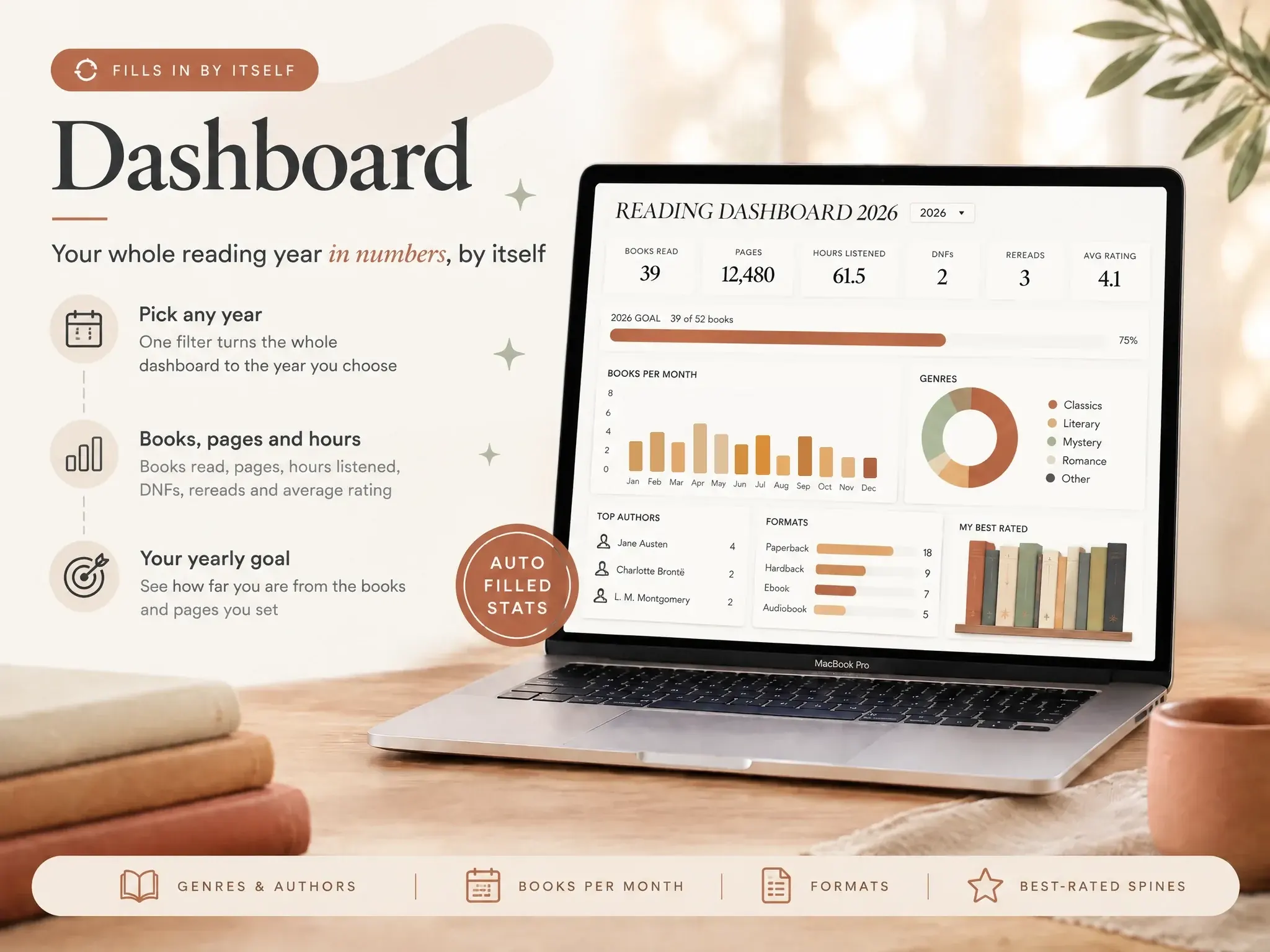
Review your goal when the year changes
Review a reading goal when your calendar or reading choices change. Life changes or a reading slump can make the original target less useful. Revise the number, switch measures, or pause the goal. Goodreads lets readers change their Reading Challenge goal when their estimate changes; the goal is a personal setting.
One monthly check is enough for many readers. Compare your current record with the target, then ask whether the goal is helping. If you are behind, pause before adding pressure. You could make more time available, continue at the current pace, lower the target, or stop tracking for a while.
The NPR report on setting reading goals describes advice to adjust a target during the year. OwlCrate's guide to reading goals also treats goals as personal and suggests revising one when it stops fitting. An annual challenge is optional; change your goal when your reading changes.
Where the Ultimate Book Tracker Fits
A record can be as simple as a title and a finished date. Add format if you want to see audiobooks alongside print and ebooks. Add pages or hours listened only if those measures help answer a question you have. A tracker can help you decide which fields are useful before you build a larger system.
Ultimate Book Tracker (by Cosmo Suite: one Excel and Google Sheets file, 14 tabs, $9 once) is a spreadsheet book tracker with a Reading List and Dashboard. The Dashboard includes a reading goal field and progress view. Ultimate Book Tracker keeps that goal beside a personal reading list, and its Monthly Wrap-Up view can help you review a month without entering the same totals twice. The goal remains yours to set and change.
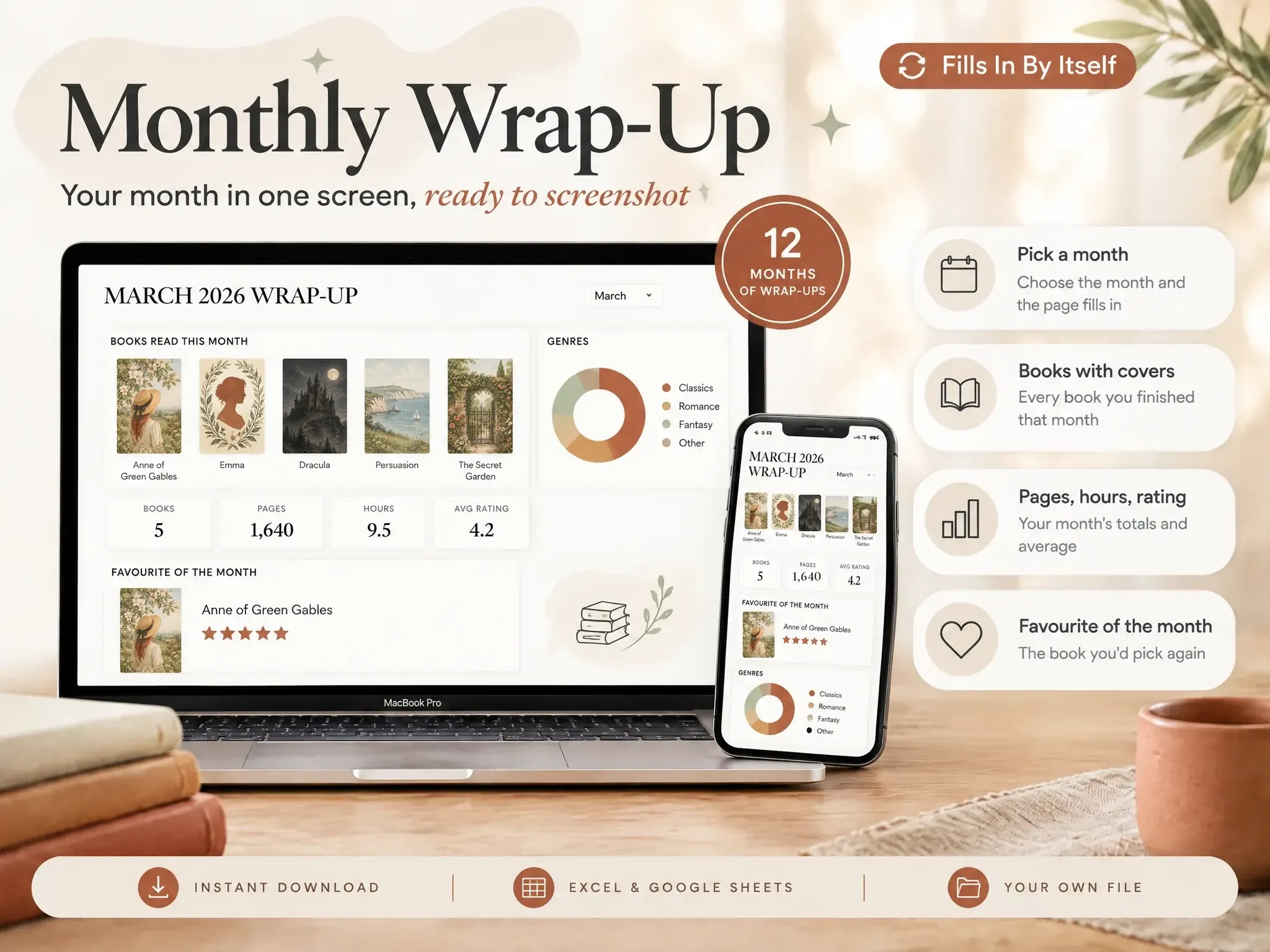
Use the Ultimate Book Tracker reading list only if a prepared spreadsheet suits the way you keep records. A notebook, your existing app, or a plain list can work too. If the process starts to distract you from reading, remove fields until the record feels easy again.
Ultimate Book Tracker by Cosmo Suite publishes this guide. Product details come from the included file and the screenshots shown here. The linked publisher and support sources explain the goal-setting examples; the about page identifies the publisher. Our editorial policy explains how we check and correct guides. Contact us through the site if you spot an error.
Frequently asked questions
What is a good reading goal for an adult?
A good goal fits the time and reading you already enjoy. Start from last year's finished books, pages, or minutes, then choose a small step that feels useful rather than punishing.
How many books should I read in a year?
There is no single right number. Use your own recent reading as a starting point, and account for the length and format of the books you choose.
Should I set a goal by books, pages, or minutes?
Use books when finishing titles matters to you, pages when you read mostly print or ebooks, and minutes when time is the part you want to make room for.
Can I change my reading goal during the year?
Yes. Review it when your schedule or reading changes. A goal is a planning tool, so you can raise it, lower it, or choose a different measure.
How do I track a reading goal without making reading feel like work?
Record only the measure you chose and check it occasionally. If the tracker adds more effort than insight, simplify the fields or take a break from tracking.
Do audiobooks count toward a reading goal?
They can if that matches your goal. Count completed audiobooks as books, or track listening time separately from page totals so the measures stay clear.
Frequently asked questions
What is a good reading goal for an adult?
A good goal fits the time and reading you already enjoy. Start from last year's finished books, pages, or minutes, then choose a small step that feels useful rather than punishing.
How many books should I read in a year?
There is no single right number. Use your own recent reading as a starting point, and account for the length and format of the books you choose.
Should I set a goal by books, pages, or minutes?
Use books when finishing titles matters to you, pages when you read mostly print or ebooks, and minutes when time is the part you want to make room for.
Can I change my reading goal during the year?
Yes. Review it when your schedule or reading changes. A goal is a planning tool, so you can raise it, lower it, or choose a different measure.
How do I track a reading goal without making reading feel like work?
Record only the measure you chose and check it occasionally. If the tracker adds more effort than insight, simplify the fields or take a break from tracking.
Do audiobooks count toward a reading goal?
They can if that matches your goal. Count completed audiobooks as books, or track listening time separately from page totals so the measures stay clear.
