Reading Nook Ideas for Small Spaces: Make a Corner Work
Reading nook ideas for small spaces can start with a chair you own. Add useful light, a place for your book, and one detail that feels like you.
By Ultimate Book Tracker by Cosmo Suite · Editorial policy
Published · Updated · 8 min read
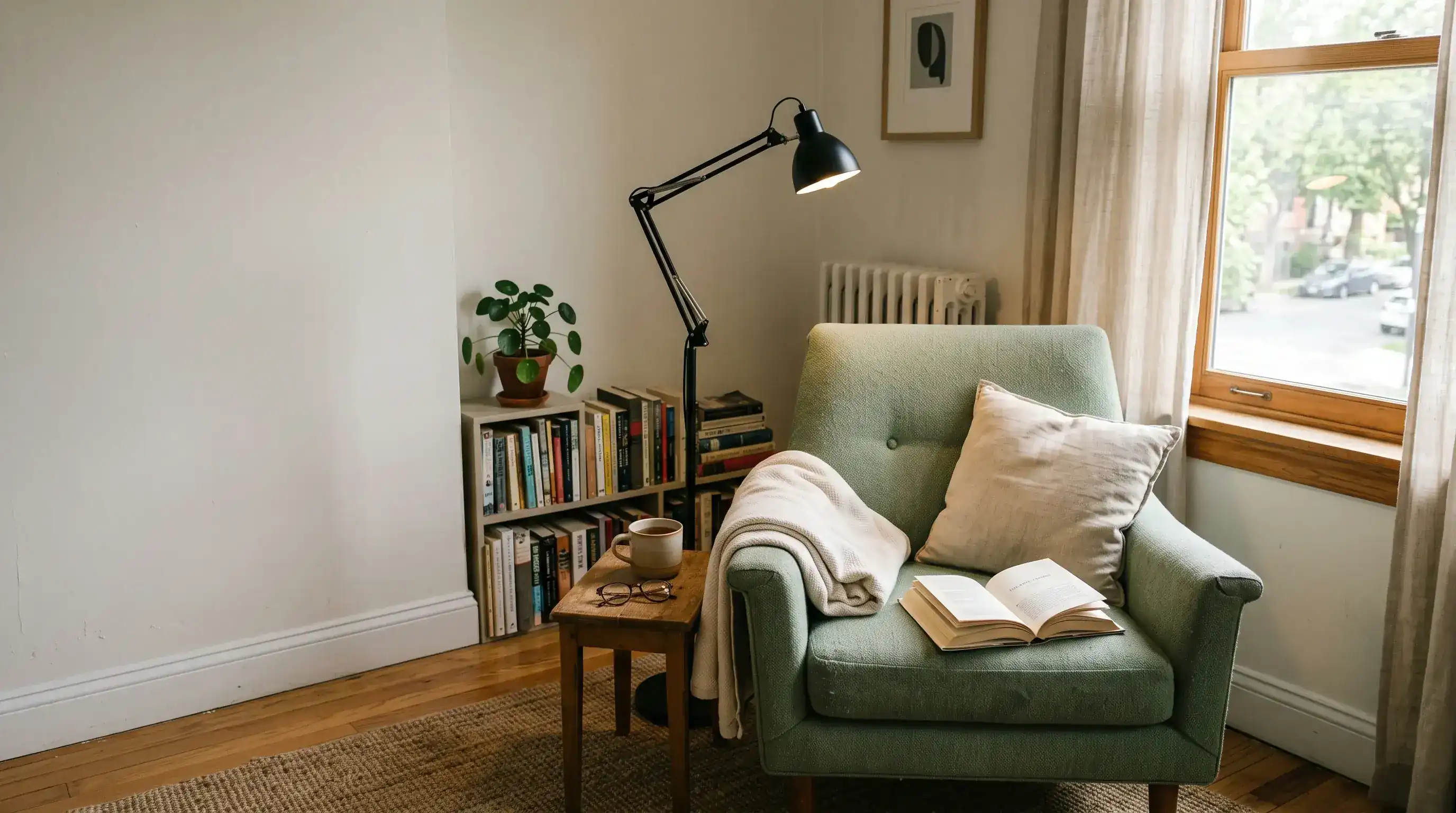
You have a corner that could be pleasant to read in. It may also be where the laundry basket, spare cables and books you meant to return have gathered. The usual inspiration photos can make the fix look like a new chair, built-in shelves and a room makeover.
You can make a useful nook with the furniture you already have. Pick a place to sit, solve the light, and put one book within reach. Then add only the thing that would make you return to that spot. These reading nook ideas are for small homes, shared rooms and budgets that have other plans.
If you also want to keep the books you plan to read in one place, a book tracker with a Reading List and TBR & Wishlist includes both alongside your reading records.
The Short Version
A reading nook is a small place arranged for reading. It needs a seat you like, light that lets you read, and a nearby place for your current book. Start with a sofa end, bedroom corner or chair that is already in the room. Try it for a few sessions before you buy shelves or decor.
Treat it as a small reading setup. If you already have somewhere comfortable to sit, the missing piece may be a lamp or a basket. If the light is good, the missing piece may be a cushion. The corner does not need to match a photo to work for you.
Reading nook ideas at a glance
The easiest reading nook ideas depend on what your room already gives you. Use the table to choose a starting point, then leave out anything that would crowd the space or create another thing to tidy. Each row names a common setup and one thing to check before choosing.
| Space you have | Start with | Add only if needed | Watch for |
|---|---|---|---|
| Sofa end | A cushion and side table | A lamp you can angle | The seat may stay in the path |
| Bedroom corner | Existing chair or bed edge | A clip-on light and book basket | Keep the doorway and route clear |
| Window side | Chair or bench already there | Curtain adjustment for glare | Daylight changes after sunset |
| Shared living room | Turn a chair toward a quiet wall | A lamp or small rug | The nook may need to reset each day |
| No free floor space | A cushion on the bed | A tray or bedside ledge | Put the cushion away when finished |
There is no required checklist of matching furniture. These choices follow the same practical idea found in the Burlington County Library System's reading nook guide: make the space fit the reader and the room. Your version can be far simpler than a built-in window seat. For more visual examples, browse the galleries at Architectural Digest and Vogue. Treat them as inspiration, not a shopping list.
Use the seat you already have
An existing chair or sofa can become your reading spot with a book and light close by. Before shopping for an armchair, sit in the places you already use and notice which one feels comfortable for a chapter. The best seat is the one you will choose again.
If the sofa is your answer, mark one end with a cushion or folded blanket. Keep a small stool nearby if a side table would take up too much room. A sturdy tray can hold your book while you read, then move when someone else needs the seat.
If you choose a bedroom chair, clear its seat and give it one job. A folded throw can make it feel inviting without asking the chair to hold laundry. For a chair that feels fine for a few minutes but not longer, add a cushion you already own and test again.
Borrow a corner near a window
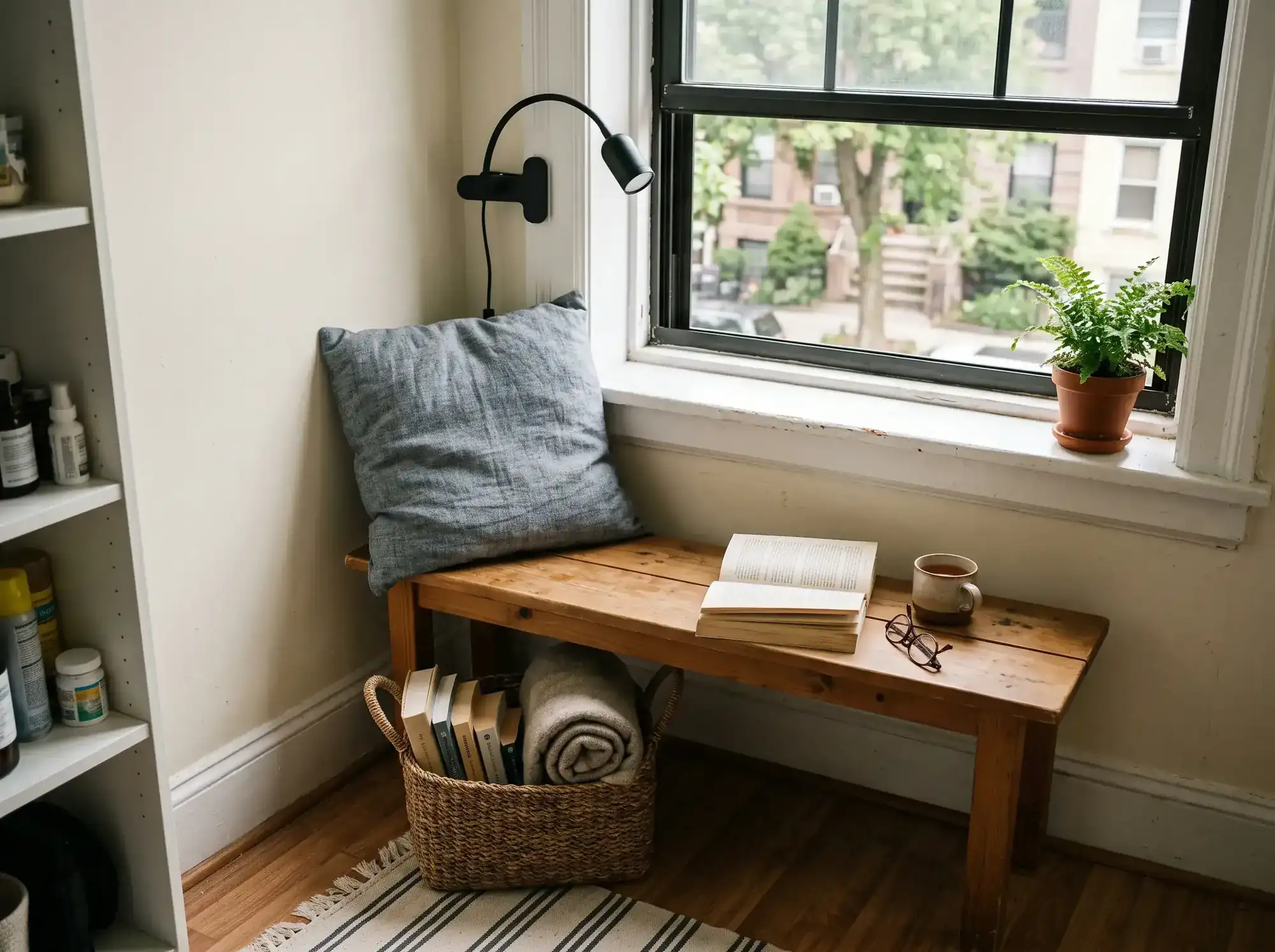
A window can give a reading corner pleasant daylight, especially when an existing chair or bench already sits nearby. Turn the seat so the page is comfortable to read and the view still feels inviting. If direct sun makes the page hard to see, adjust the curtain or try another angle.
You do not need to build a window seat. A chair beside the window, a firm cushion on an existing bench, or even a spot at the end of a table can be enough. Keep the book and any small table clear of the window opening.
Daylight will not help with evening reading, so check the nook at the time you expect to use it. An adjustable lamp beside the seat may solve that. If you do not have one, move a lamp from elsewhere for a few nights before deciding whether you need another. A study comparing illumination sources also measured differences in reading and visual comfort, which is another reason to test your own setup instead of choosing by appearance alone (study).
Make a bedroom corner earn its place
A bedroom nook can use the few feet beside a bed, an existing chair or a small clear corner. Keep the setup easy to move: a cushion, a clamp-on light and a basket for the current book can work where a bookcase would feel bulky. Try the layout before bringing more furniture into the room.
If the bed is your only comfortable seat, use a tray or bedside surface to hold your book and glasses. A cushion behind your back may help you settle in. Put the tray away when you are done so it does not take over the bed.
Think about the route through the room before arranging anything. A nook should not make it harder to open a drawer or get to the door. If the only available space blocks a usual path, choose a different place or keep the setup in a basket you can move.
Give a shared living room a reading zone
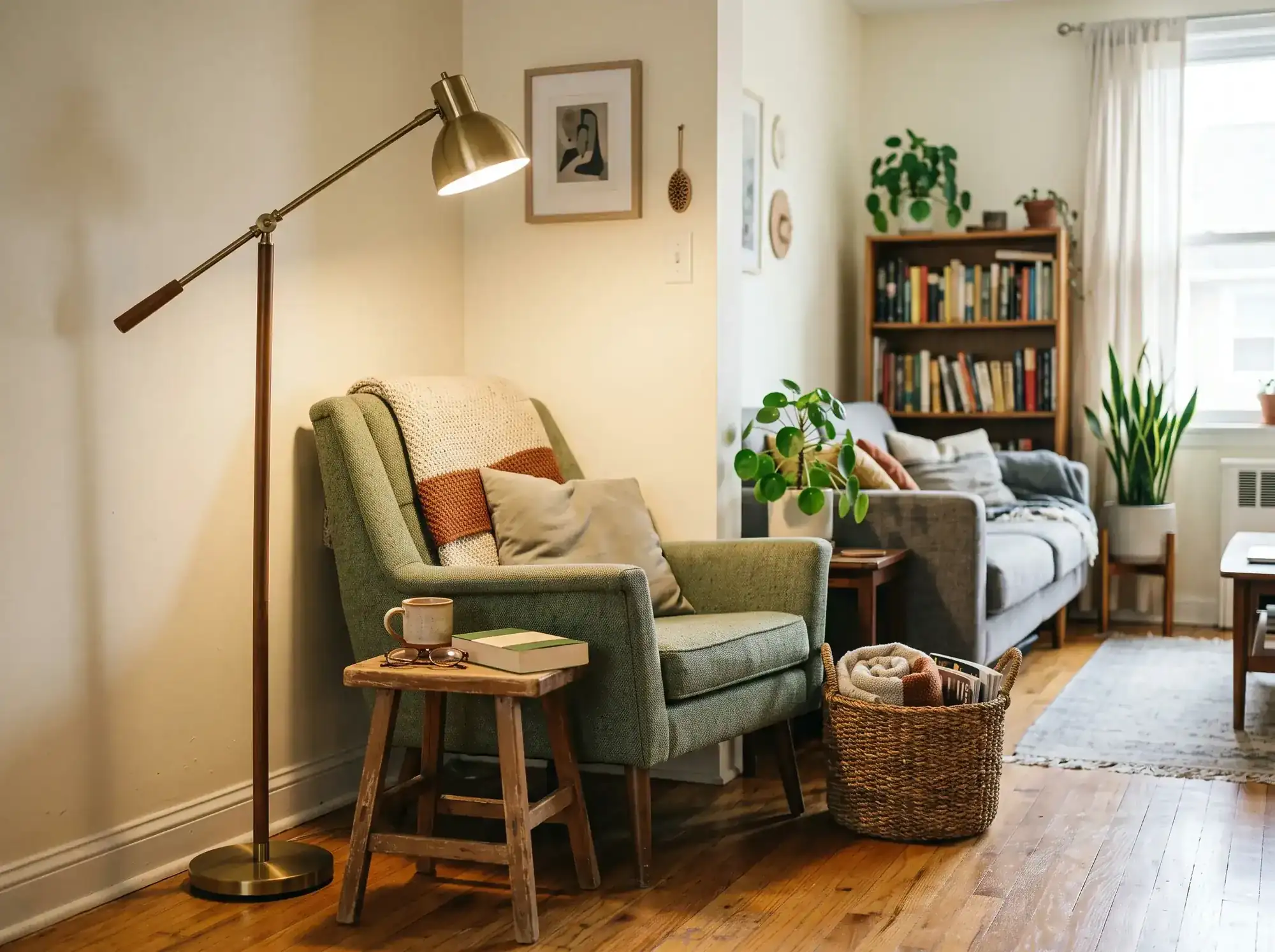
A reading zone is a seat set apart from a shared room by its position, light or a small rug. Turn an existing chair toward a quiet wall instead of the television. A lamp or cushion can make the spot feel distinct without adding a divider. The light itself can mark the corner if a rug would take up too much floor.
When the room has to serve several purposes, keep the nook quick to reset. A basket can collect the book and blanket after a session. A side table may be a stool that already moves between rooms. The goal is to make the reading setup easy to put back, not to claim the whole room.
If noise is the main problem, try the quieter end of the room or a different time of day. Headphones may help some readers, while others prefer to hear what is happening around them. Choose what suits the household and the kind of reading you want to do.
Try a cushion or a chair that folds away
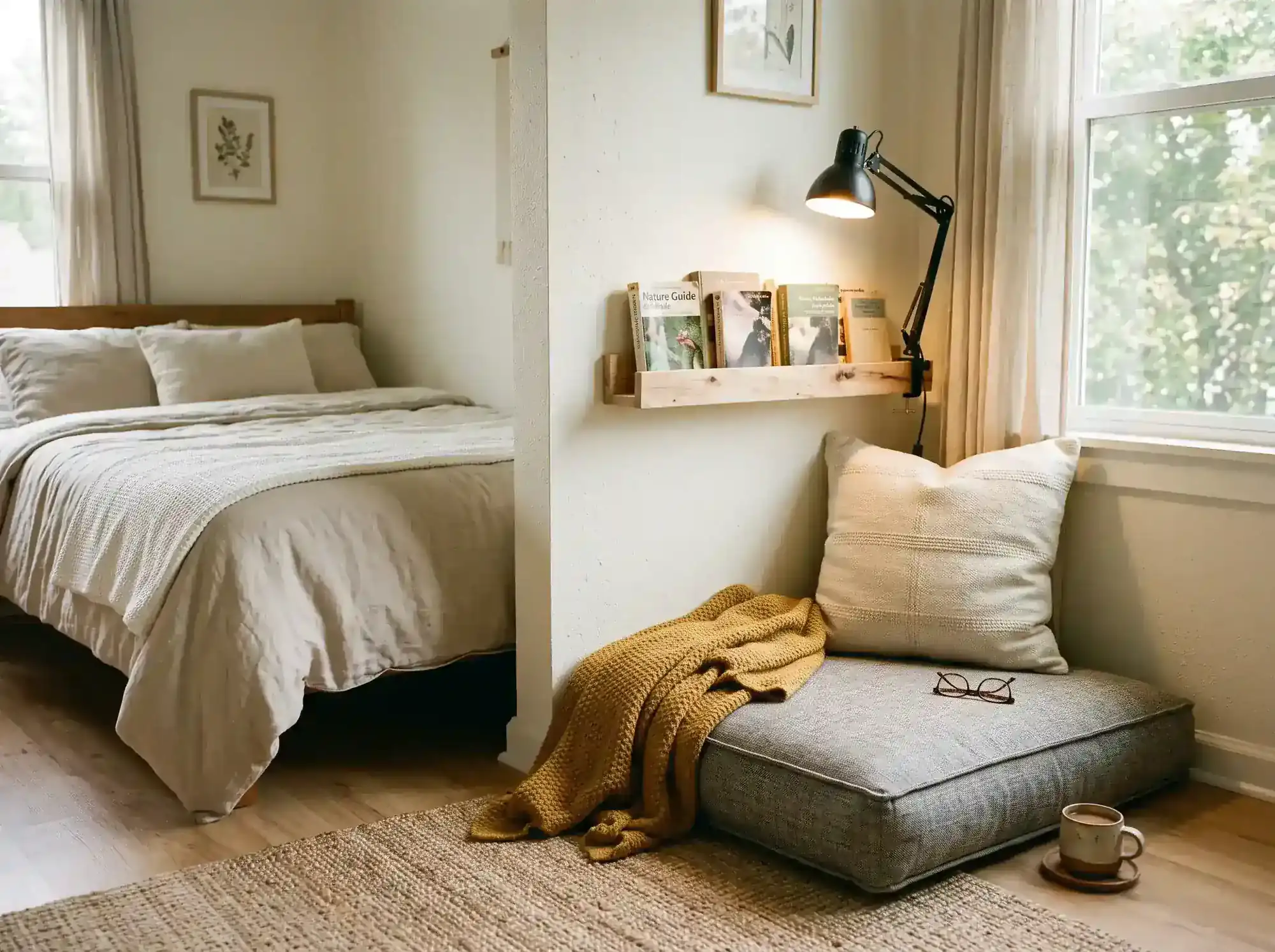
A floor cushion or folding chair can create a nook that disappears when the room needs its space back. Use one you already have, place it near a lamp, and check whether the back support feels comfortable for the amount of time you plan to read. This helps when every chair and corner already has another job.
This option can work in a studio, shared room or bedroom with little free floor space. A basket can hold the cushion, book and blanket between sessions. If getting down to the floor or sitting there feels uncomfortable, skip this idea. A nook should suit your body and room.
Turn a ledge or shelf into the book station
A book station is the nearby surface or basket where you keep the current book and small reading items. Use an existing shelf, bedside table or the top of a low cabinet. Keep just the book you are reading and perhaps one next choice within reach. That makes it easier to put the book back without building new storage around it.
If the shelf is already full, a basket on the floor may be easier. Use it for library returns or books you are currently choosing between. Move the rest back to their usual homes so the nook stays ready rather than becoming another stack to sort.
For a book corner with children, the National Literacy Trust's reading-environment resource offers ideas for making books visible and creating inviting places to read. At home, adapt only what fits your reader and available space.
Make a small nook feel personal
One familiar detail can make a borrowed corner feel like your place to read. Try a cushion cover, a throw, a postcard, or a small plant you already own. Choose the item after the seat and light work, so decoration does not hide a setup that is uncomfortable. The detail can be something you move in and out with the book.
Avoid filling every surface. A crowded nook can make it hard to set down a book or find your glasses. Leave enough room for the small things you actually use. If the extra decor starts to collect dust or get in the way, take it back to its usual spot.
Test the nook before buying anything
Try the arrangement during a real reading session before you spend money on it. Sit down with the book you are reading, use the light available at that time, and notice what you reach for. Then fix that one inconvenience rather than shopping for a complete set. The trial can tell you which small change matters in your routine. This test setup uses your own seat, book and usual reading time.
For example, imagine a small bedroom with a chair already beside the window. The chair works in daylight, but evening reading is awkward and the book has nowhere to go. Move a lamp from the desk and place a basket beside the chair for a few nights. If that solves the problem, the nook is ready. If not, you have learned what a purchase would need to do.
Use these questions to check the setup:
- Can you sit in the spot comfortably for the time you like to read?
- Can you see the page without shifting the lamp or blocking the light?
- Is there a nearby place for your book and any reading glasses?
- Can you leave the room as it was when you finish?
If you are also sorting which titles you own or want to read next, our guide to a book tracker spreadsheet explains one way to keep a personal list. The nook itself can stay as simple as a chair and a book.
For a separate place to keep those titles, a book tracker with a Reading List and TBR & Wishlist includes those lists in the workbook too.
Ultimate Book Tracker by Cosmo Suite publishes this guide. The about page identifies the publisher, and the editorial policy explains how we check and correct articles. Contact us through the site if you spot an error.
Frequently asked questions
How do I make a reading nook in a small space?
Choose a seat you already use, place a light where you can read comfortably, and keep one book within reach. A sofa end, bedroom corner or window side can work without adding a new chair.
What should a reading nook include?
Start with a comfortable seat, useful light and a place to put your current book. Add storage or decoration only when you notice a need.
How can I make a reading nook on a budget?
Reuse a chair, cushion, lamp or basket you have. Try the layout for a few reading sessions before buying anything for the space.
Where is the best place for a reading nook?
Pick a spot where you can sit comfortably and read with enough light. A quiet corner of a bedroom or living room often works; the best choice depends on your home.
Can a reading nook work in a bedroom?
Yes. Use an open corner or the side of a bed, then keep the setup small enough that it does not block a doorway or your usual route through the room.
Sources
Keep reading
Reading Life
Reading Slump: How to Find Your Way Back to a Book
Reading slump: notice what changed, set aside a book that feels like work, and choose one gentle next step without turning reading into another goal.
· 8 min read
Reading Life
TBR List Template: Columns That Help You Choose
TBR list template with practical columns for what you own, what you want next, and why it caught your eye. Use a simple view to pick a book.
· 8 min read

Reading Life
What Does DNF Mean in Books? (And How to Track the Ones You Quit)
What does DNF mean in books? It means Did Not Finish. Learn when readers use it, how it differs from pausing, and how to record the page where you stopped.
· 8 min read
