52 Book Challenge: How to Plan It So You Finish (and Enjoy It)
52 book challenge planning starts with your reading pace, not a weekly quota. Build a flexible year, leave room for long books, and track what counts.
By Ultimate Book Tracker by Cosmo Suite · Editorial policy
Published · 7 min read
You start the year with a 52 book challenge in mind. One book a week sounds simple until a long novel takes three weeks, work gets busy, or you want to reread a favourite. A rigid weekly target can turn a pleasant idea into a running tally of what you have not finished. If you are planning for 2027, The 52 Book Club has published its new set of prompts and a guide to interpreting them.
You can plan the year without making every week a deadline. Start from your own recent reading, decide what counts, and use a flexible calendar with room for longer books and breaks. The goal is a guide for choosing and remembering books, not a test of how quickly you read.
The Short Version
- One book a week is the annual average, not a rule for each week.
- Use your recent pace to decide whether 52 books fits this year.
- Track completion dates and leave open space for changes.
What does a 52 book challenge ask you to do?
A 52 book challenge is a year-long reading target of 52 finished books, often paired with prompts such as choosing books by genre or subject. The exact rules vary, so read the instructions for the challenge you joined before deciding what counts.
The 52 Book Club’s 2027 challenge pairs one book with each of 52 unique prompts. The club says the challenge is self-led, starts on January 1, 2027, and readers can track it however they prefer. Its guide to the prompts offers examples for interpreting them. Those are that club’s rules, not a universal standard. Check the instructions for your own group when they differ.
The useful first step is to write down your definition. Do rereads count? What about a book you started last year and finished in January? Will one title fill multiple prompts? A clear answer now makes your year-end total easier to understand.
52 book challenge at a glance
Choose the version that fits what you want from the challenge. You can adjust the target without abandoning the pleasure of keeping a reading record.
| Your situation | A workable plan | Best for |
|---|---|---|
| You already read close to 52 books | Set 52 as a flexible annual target | Readers who want a light structure |
| You read fewer books last year | Choose a smaller number or use prompts with overlap | Readers who want to stretch without pressure |
| Your books vary a lot in length | Track books and pages separately | Readers who want context for the total |
| Your schedule changes by season | Plan monthly check-ins, not weekly deadlines | Readers with uneven free time |
| You want to remember the year | Record title, finish date, and one useful note | Readers who value a personal history |
The plan should help you decide what to read next and preserve what you finished. If it makes you avoid a long book or rush through one you enjoy, change the plan.
One reading year, worked through
Imagine a reader who finished 38 books last year and logged 6 DNFs. For the coming year, they set a goal of 44 finished books and leave 8 weeks unassigned. The numbers here are a fictional example, not a customer record or a promise about what a reader should finish. The DNFs stay visible in a separate status and do not add to the finished-book goal.
The reader marks 44 spaces across the year, with several months carrying three or four planned finishes and a few months left open. The calendar is a sketch, not a schedule. If a long book moves into the next month, the reader shifts the next choice instead of doubling up to catch up.
At the start of each month, they choose one likely next book and keep a second option nearby. A prompt list can help with variety, but it does not have to dictate the order. The 52 Book Club's 2027 guide invites readers to interpret prompts creatively, which makes it easier to match a prompt to a book already on the list.
For readers who prefer the full 52, the same approach works with a wider target. Start from the year as a whole. If each week averaged one finish, that would reach 52. But a year can include several reading-free weeks and several weeks with more than one finish. The annual total matters more than a perfect sequence.
The same yearly record can hold the title and finish date beside its status. This book tracker spreadsheet guide shows how one entry can sit in a larger reading history.
Build a flexible plan for 52 books
Use a short setup that you can revise. A useful plan has a baseline, a definition, and a review point.
- Look at a recent year. Count finished books if you already have that record. If you do not, choose a smaller trial target for the first few months rather than guessing at a pace.
- Decide what counts. Write down your rules for rereads, audiobooks, unfinished books, and challenge prompts. Keep the challenge’s published rules separate from your personal reading goal.
- Place books loosely. Add a few likely titles to each month, then leave empty spaces. Avoid assigning every week before you know what you will want to read.
- Review once a month. Compare the plan with the reading you enjoyed. Move titles, lower the number, or keep going as you are.
If you want a page-based view as well, use page totals as context rather than a substitute for the book count. Reedsy’s 2026 book-length overview reports genre averages from its marketplace and notes that length varies by genre. Its paperback page conversion is a rough guide, not a measurement of every edition. A 52-title goal can therefore represent very different amounts of reading for different people.
How many pages does a 52 book challenge mean?
There is no fixed page target because books differ in length, and editions can paginate the same text differently. Reedsy’s 2026 table gives an average of 93,000 words for fantasy novels and 55,000 for horror novels in its marketplace data. Those figures describe genres in that source’s sample; they do not define what a reader must finish.
You can use your own finished books to estimate a personal page total. For example, if your last 10 books averaged 320 pages, multiplying that personal average by 52 gives a rough planning estimate. This is arithmetic for that reader’s history, not a general reading standard. If you have no page history, skip the estimate and track books instead.
Separating the two measures can also make a year easier to interpret. A book total answers “How many titles did I finish?” A page total answers “How much text did I read?” Neither number captures how much you enjoyed the books, and neither needs to be shared.
What helps the challenge stay enjoyable?
The most useful adjustment is to stop treating the weekly average as a weekly command. A long book can take longer. A busy month can have no finishes. A holiday can make room for several. The annual average is a way to picture the target, not evidence that every week should look the same.
Keep one or two open slots in your next-choice list. Pick a shorter book when you want a quick finish, but do not choose one only to repair a number. You can also pause a book that is not working for you. If your challenge rules count only completed books, note the DNF separately and continue with a different title.
If your reading changes during the year, update the goal. Your record can still show what happened even if the original target no longer fits. A target that changes is more informative than a plan you stop looking at because it feels impossible. Keep the original target in a note beside the revised one. That preserves the story of the year without pretending the first plan still fits.
For a lighter starting point, reading goals for adults can begin with your recent pace. If your aim is to make more space for books, the guide to reading more books covers small ways to make reading easier to return to. For the underlying fields and views, see the book tracker spreadsheet guide.
Where the Ultimate Book Tracker fits
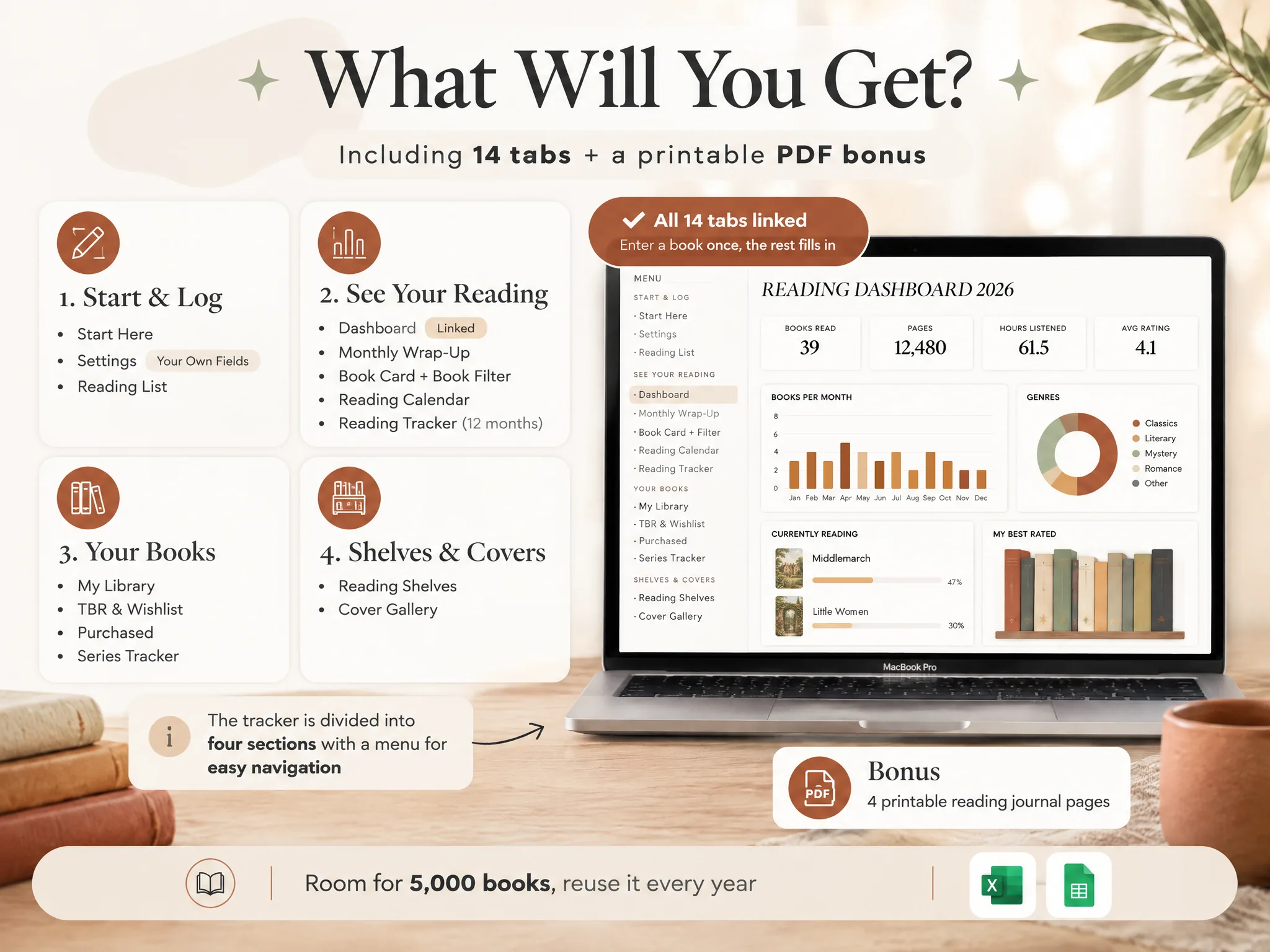
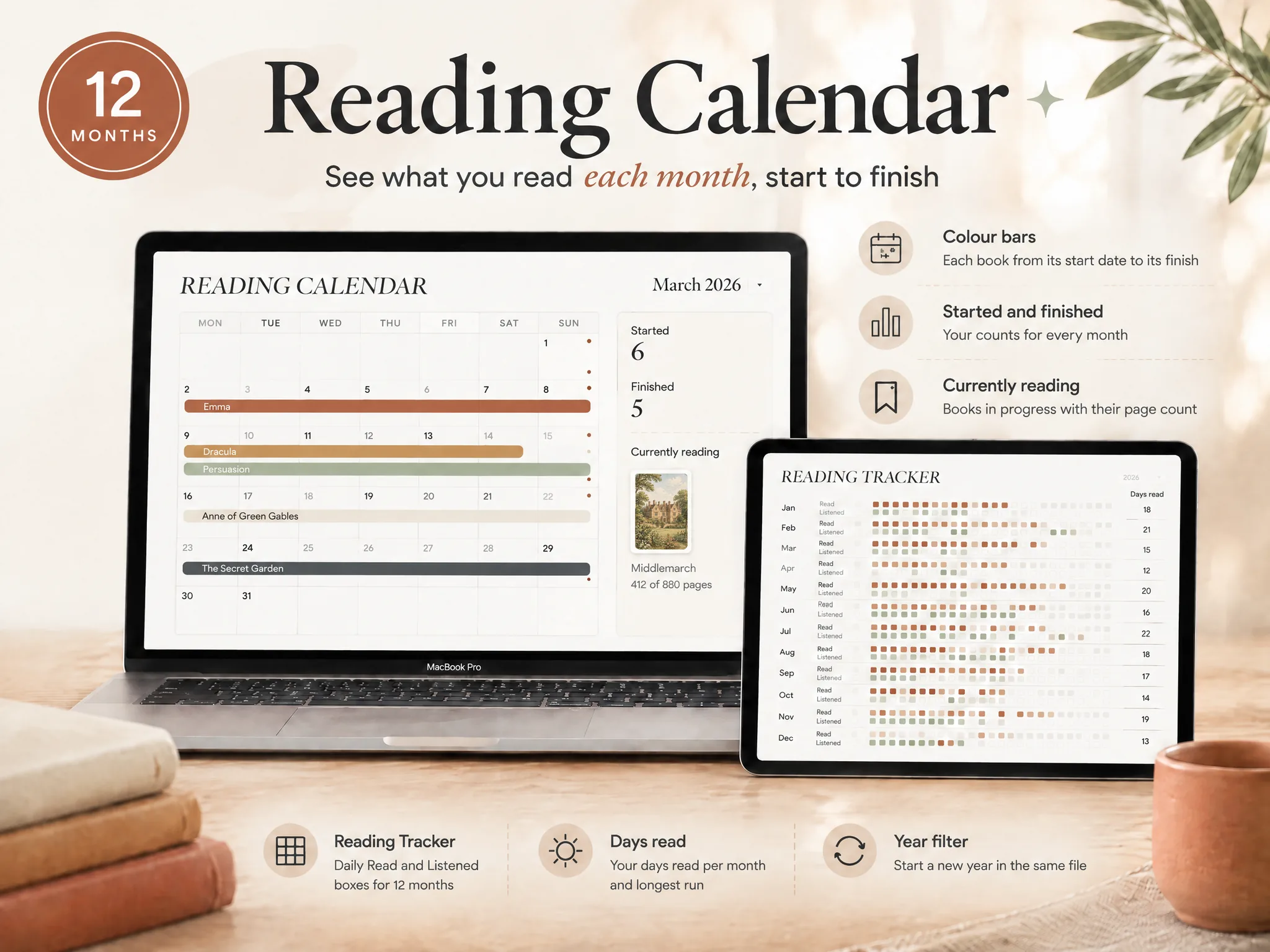
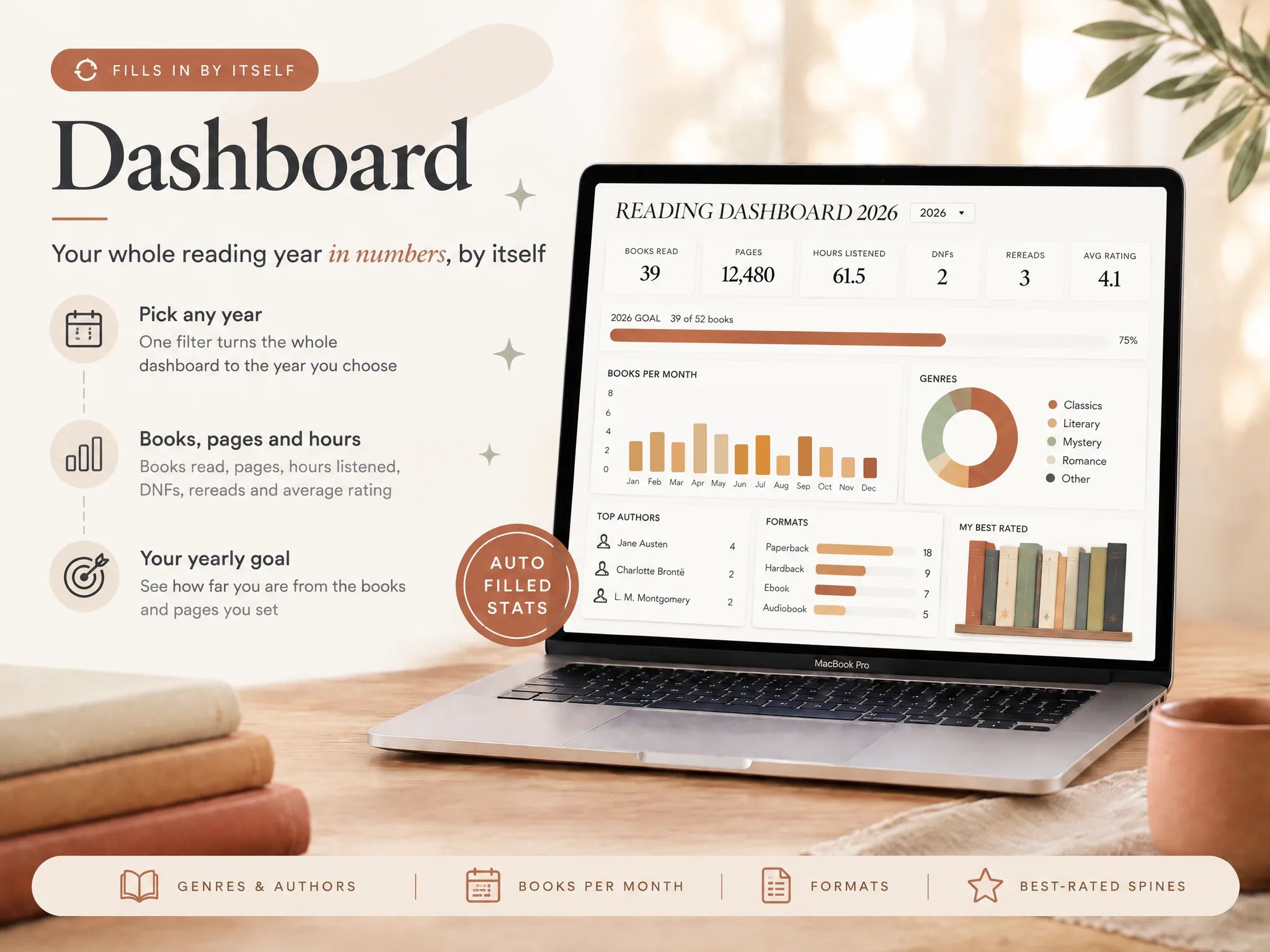
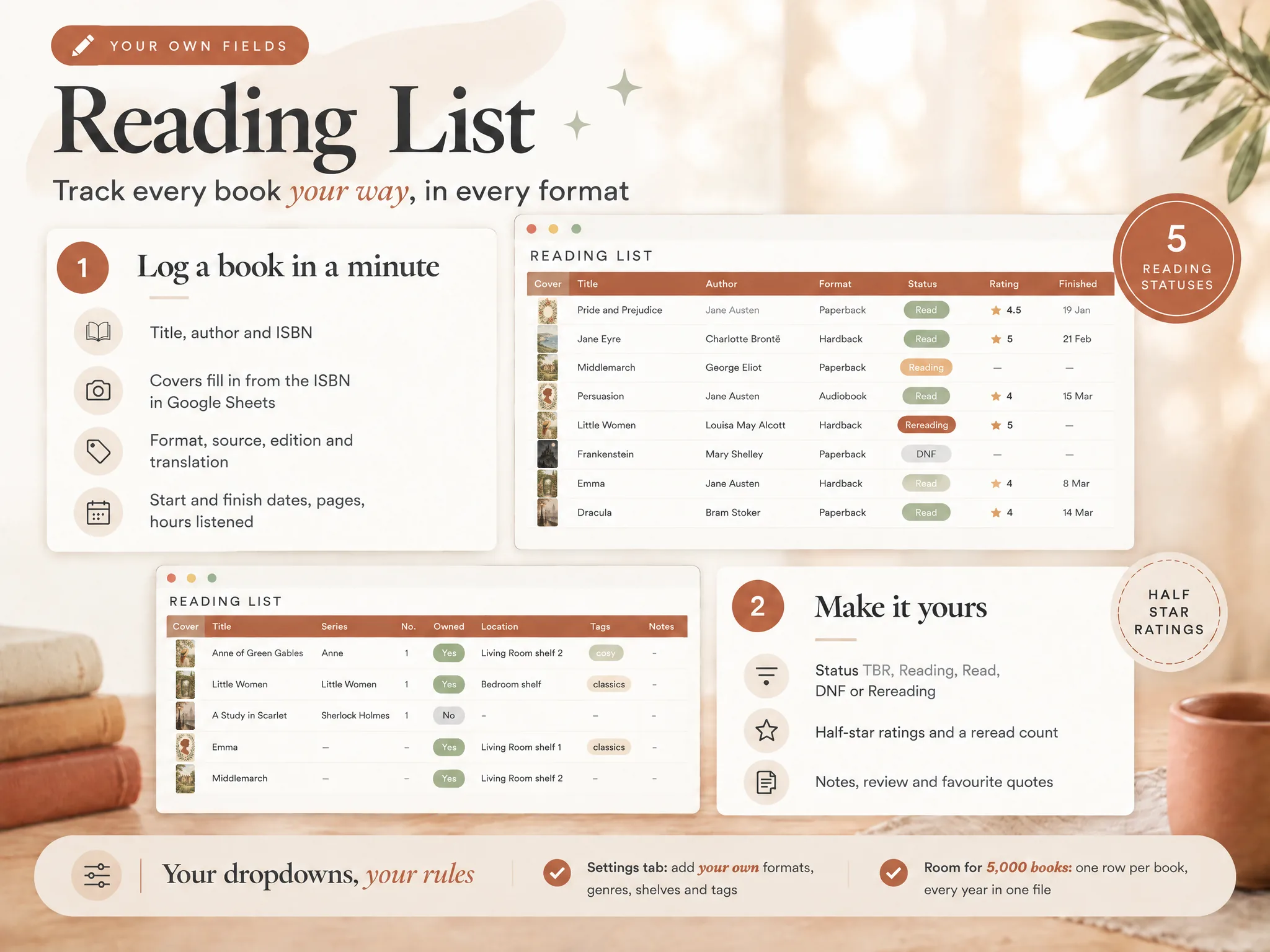
If you want to keep the challenge beside the books you finish, Ultimate Book Tracker (by Cosmo Suite: one Excel and Google Sheets file, 14 tabs, $9 once) has a Reading List and Reading Calendar for titles and dates, plus a Dashboard for yearly totals. Use those fields if they match your record, or keep the challenge in a separate list.
The file does not set a pace for you. You decide what counts, when to review, and whether 52 remains the right target. See the Ultimate Book Tracker contents and file details to check whether a ready-made workbook fits the way you keep track of books. The About page explains who makes it, and the editorial policy explains how this blog checks its sources.
Frequently asked questions
How many books a week is a 52 book challenge?
It averages one book a week across a year. That is a planning average, not a deadline for every week. A longer book, a busy month, or a reading break can shift the pace.
Can I complete a 52 book challenge if I start late?
Yes, if you want to use books read earlier in the same calendar year, or set a smaller target for the time left. The rules depend on the challenge you joined, so check its date and counting rules.
Do audiobooks count for a 52 book challenge?
That depends on your challenge rules. The 52 Book Club's 2027 guide allows different formats for its prompts, so an audiobook can fit when it meets the prompt. Check the rules for your own group.
Should rereads count toward a 52 book challenge?
That depends on your challenge and your own goal. The 52 Book Club's 2027 guide suggests rereading a favourite for its nostalgic-read prompt. Decide whether your reread fills a prompt, counts as a separate book, or both.
What if I fall behind on my 52 book challenge?
Review the goal before trying to catch up. You can keep reading at your pace, lower the target, or treat the challenge as a record of what you read. You do not need to force a book to meet a number.
How can I track a 52 book challenge?
Keep one entry per finished book and record its completion date. Add a challenge prompt or category only if you need it. A yearly calendar or spreadsheet can show progress without setting a weekly deadline.